
The Endgame Problem
Nobody Has a Plan. Nobody Is Looking for One.
Strategic Conflict Assessment Series
Briefing #8
STATUS: Escalating Regional War
DATA CUTOFF: March 20, 2026 | 17:00 EST
This is the eighth installment in the live conflict assessment series.
The first briefing examined whether the Islamic Republic could survive leadership decapitation.

The second analyzed how regimes under existential pressure expand conflict outward through proxy networks.

The third examined industrial attrition and the cost imbalance between cheap offensive weapons and expensive defensive systems.

The fourth analyzed how disruption in the Strait of Hormuz transmits into the global economy.

The fifth documented the physical infrastructure of global trade breaking in real time.

The sixth argued that financial markets had not yet priced what the physical world was already experiencing.

The seventh measured seventeen days of battlefield data against the opening thesis.

The regime did not collapse.
It consolidated under the IRGC.
This briefing addresses the question that has been missing from nearly every official communication since the war began:
How does this end?
WAR CLOCK
T+0
Feb 28, 2026 | 01:30 EST
The first wave of U.S. and Israeli strikes begins.
T+81H
Mar 3, 2026 | 10:57 EST
Leadership decapitation confirmed. Iranian retaliation begins.
T+113H
Mar 4, 2026 | 19:00 EST
Proxy networks activate across Lebanon, Iraq, and Gulf states.
T+137H
Mar 5, 2026 | 18:30 EST
Drone saturation attacks continue across Gulf infrastructure.
T+162H
Mar 6, 2026 | 19:30 EST
Commercial shipping disruption accelerates in the Strait of Hormuz.
T+286H
Mar 11, 2026 | 23:30 EST
Mines confirmed. Maritime system breaking.
T+375H
Mar 15, 2026 | 17:00 EST
Markets remain disconnected from physical conditions.
T+449H
Mar 18, 2026 | 17:00 EST
Seventeen days in.
The regime stands.
The IRGC has consolidated power.
The system still holds.
T+496H
Mar 20, 2026 | 17:00 EST
• Trump publishes five war objectives.
• Declares that policing the Strait of Hormuz will be the responsibility of other nations.
• A nineteen-nation coalition issues a joint statement supporting maritime security in the strait.
• The Pentagon prepares contingency plans for U.S. ground force deployment.
• Iraq declares force majeure on foreign-developed oil fields. Basra production falls by 73 percent.
• The Pentagon confirms a $200 billion supplemental funding request.
• Israeli leadership states that the war will require a ground component
SNAPSHOT — Conflict Status
Cutoff: March 20, 2026 | 17:00 EST
496 hours have passed since the opening strike.
∙The war began the morning after Oman’s Foreign Minister said peace was within reach. Talks were scheduled to resume March 2. The strikes happened instead.
∙Trump published five war objectives on Truth Social at 4:13 PM EST. The fifth objective states: “The Hormuz Strait will have to be guarded and policed by other Nations who use it. The United States does not”. Three hours earlier he called those same nations cowards.
∙No ceasefire is under discussion. Trump said we want to talk but there is nobody to talk to. He added that he likes it that way.
∙Iran’s publicly stated ceasefire conditions: full withdrawal of U.S. forces from the region, end of all sanctions, recognition of Iranian sovereignty over the Strait of Hormuz, normalization of Mojtaba Khamenei’s legitimacy as Supreme Leader. These demands are written to be rejected.
• Iranian officials have become reluctant to even discuss reopening the Strait of Hormuz. They are focused on survival according to Bloomberg.
• A nineteen nation joint statement including the UK, France, Germany, Italy, the Netherlands, Japan, Canada, and South Korea condemned Iran’s actions and expressed readiness to contribute to efforts that ensure safe passage through the strait. This is the most significant coalition development since the war began.
• Pentagon officials have prepared detailed plans for deploying U.S. ground forces into Iran according to CBS News. Senior commanders have submitted contingency requests. Plans include detention handling for Iranian personnel. A White House official said the U.S. military can take out Kharg Island at any time.
• Iraq declared force majeure on all oil fields developed by foreign companies. Basra production fell from 3.3 million barrels per day to 900,000 barrels per day. That represents a 73 percent reduction at one of the world’s largest production centers.
• QatarEnergy’s CEO said he warned U.S. officials before the war that provoking Iran could have severe consequences for global energy markets. He was right and he was ignored.
• Israel struck South Pars on March 18 with U.S. knowledge and approval. Iran retaliated against Qatar’s Ras Laffan Industrial City. Trump publicly disavowed the strike.
• QatarEnergy confirmed LNG export capacity has been reduced by 17 percent. Revenue losses exceed $20 billion annually. Repairs may take up to five years. Force majeure has been declared on long term contracts with China, South Korea, Italy, and Belgium.
• Diesel is now above $5 per gallon nationally. No crude oil tankers have sailed through Hormuz during the past 24 hours.
• Marjorie Taylor Greene warned publicly that deploying ground troops would break a key covenant of MAGA.
• The war has cost at least $16.5 billion in its first twelve days according to CSIS. The Pentagon is requesting an additional $200 billion.
• Senator Chris Murphy said there is no plan to reopen the Strait of Hormuz.
Confirmed Casualties
Primary Belligerents
∙ United States: 15 killed, 232 wounded
∙ Israel: 22 killed, 4,099 injured
∙ Iran: 3,065 to 7,378+ killed, 19,324+ injured
∙ Lebanon: 1001+ killed, 2,584+ injured
Regional Spillover
∙ UAE: 8 killed, 157 injured
∙ Kuwait: 8 killed, 99 injured
∙ Iraq: 73 killed, 139 injured
∙ West Bank: 14 killed
∙ Bahrain: 3 killed, 38 injured
∙ Saudi Arabia: 2 killed, 16 injured
∙ Oman: 3 killed, 5 injured
∙ France: 1 killed, several injured
∙ Qatar: 16 injured
∙ Jordan: 19 injured
∙ Azerbaijan: 4 injured
Total: 4,036–8,344+ killed | 24,306+ injured
Leadership Decapitation
Opening strikes:
• Ali Khamenei — Supreme Leader
• Aziz Nasirzadeh — Iranian Air Force Commander
• Abdolrahim Mousavi — Chief of Staff
• Mohammad Pakpour — IRGC Ground Forces Commander
• Ali Shamkhani — Defense Council Secretary
• Mohammad Shirazi — Head of Military Office of the Supreme Leader
• Hossein Jabal Amelian — Head of SPND
• Akbar Ghaffari — Deputy Intelligence Minister
During the war:
• Abu Ali al Askari — Kataib Hezbollah Security Commander, killed March 14
• Ali Larijani — Secretary of the Supreme National Security Council, killed March 17
• Gholam Reza Soleimani — Head of the Basij, killed March 17
• Ghassem Ghoureishi — Deputy Basij Commander, killed March 17
• Esmaeil Khatib — Intelligence Minister, killed March 18
• Ali Mohammad Naini — IRGC Spokesperson and Deputy for Public Relations, killed March 20
• Mehdi Qureishi — IRGC Aerospace Force Commander, killed March 20 in Isfahan
The regime remains intact.
The IRGC inner circle around Mojtaba is unchanged.
Every decapitation wave has produced a harder, more consolidated government than the one it removed.
Market Reaction Since First Strike
S&P 500: 6,866 pre-war → 6,506 today (-5.24%)
VIX: 19.87 pre-war → 27.30 today (+37.40%)
WTI Oil: $67.05 pre-war → $98.25 today (+46.53%)
Average Gas (Regular): $2.997 pre-war → $3.912 today (+30.53%)
Oil is above $98 WTI.
Gasoline averages $3.91 nationally.
Diesel is above $5.
The S&P 500 is down 5.24 percent.
The VIX is at 27.30.
Iraq declared force majeure on all foreign developed oil fields. Basra production fell from 3.3 million barrels per day to 900,000 barrels per day. That removed 2.4 million barrels per day from one of the world’s largest production centers in a single day.
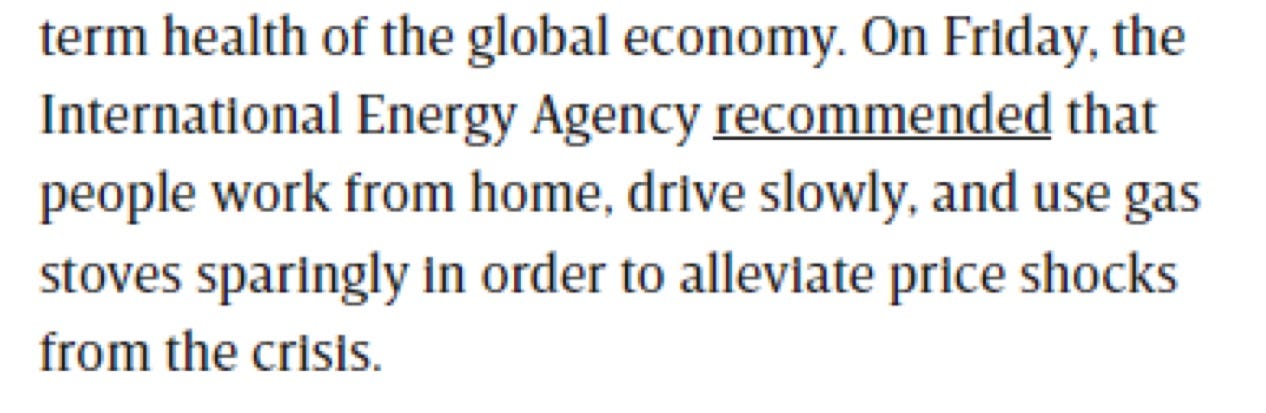
Businesses that move goods are already adding fuel surcharges or raising prices. The supply chain inflation that has not yet appeared in CPI is already entering the system.
The March CPI prints April 10.
Whatever it shows will likely become the new floor.
Bank of America notes that markets have moved past asking when the Federal Reserve will cut rates. They are now asking what could trigger hikes.
Oil above $98 WTI and further inflation pressures trigger two of the three historical conditions.
KEY JUDGMENTS
• At 4:13 PM EST on March 20, Trump published five war objectives for the first time. Objective five states that Hormuz will be policed by other nations rather than the United States. Three hours earlier he called those same nations cowards.
• The nineteen nation joint statement represents the most significant coalition development since the war began. It bypasses NATO and assembles a voluntary coalition through bilateral commitments. It does not resolve the endgame problem.
• Iranian officials are focused on regime survival and are no longer discussing reopening Hormuz.
• Iraq’s force majeure declaration and the collapse of Basra production show that supply disruption is spreading beyond the strait.
• Trump said the United States wants to talk but that there is nobody to talk to. He added that he likes it that way. That sentence captures the endgame problem.
• Pentagon planning for potential ground deployment indicates preparation for a longer war.
• The five objectives published Friday do not include regime change as a formal terminal condition. They describe military degradation rather than a political outcome.
• The war began without clearly defined objectives that could be achieved through the means being used.
• The Minab school strike killed approximately 180 civilians on the first day of the war, most of them children. Those children are the moral weight this war carries regardless of how it ends.
I. February 27
On February 27, 2026, Oman’s Foreign Minister Badr Al Busaidi announced that negotiations had reached a breakthrough.
Iran had agreed to never stockpile enriched uranium.
Iran had agreed to full verification by the International Atomic Energy Agency.
Iran had agreed to irreversibly downgrade its enriched uranium to the lowest possible level.
Al-Busaidi said peace was within reach.
Talks were expected to resume on March 2.
The strikes began at 1:30 in the morning EST on February 28.
At the time of the strikes, the IAEA had found no evidence of a structured Iranian nuclear weapons program. The Defense Intelligence Agency had concluded in 2025 it would be a decade before Iran could develop missiles capable of reaching the United States.
Trump administration officials later told congressional staff that U.S. intelligence did not suggest Iran was preparing to launch a pre-emptive strike.
What happened next depends on which version of events one chooses to believe.
Secretary of State Marco Rubio said the U.S. strike was triggered by Israel’s plan to attack Iranian leadership unilaterally. In that account the United States acted to avoid being drawn into war under worse conditions.
President Trump disagreed with that explanation.
Netanyahu denied misleading Washington and said no one tells the President of the United States what to do.
Steve Witkoff offered another version.
He said Iran entered negotiations insisting on its right to enrich uranium while boasting that its stockpile could produce eleven nuclear weapons.
Diplomats familiar with the talks say that description misrepresents Iran’s proposal. According to them Iran offered a multi year suspension of enrichment.
Both versions cannot be true.
Either the February 27 breakthrough described by Oman was real or it was not.
The Omani foreign minister was in the room. He said peace was finally within reach.
The strikes began the next morning.
Iran’s Supreme National Security Council said the attack occurred while negotiations were still underway and that the enemy believed Iran would surrender under pressure.
The diplomatic window had not yet closed.
It was forced closed by Israel, the coalition’s initiating partner, before the diplomatic window had run its course.
That matters now because the regime that agreed on February 27 to never stockpile enriched uranium no longer exists in the same form.
It has been replaced by the most hardline IRGC configuration in the history of the Islamic Republic.
Mojtaba Khamenei’s inner circle now includes individuals long associated with militant networks and international sanctions.
The men who would need to sit across a table from American diplomats today are harder, more paranoid, and more committed to using the Strait of Hormuz as a strategic weapon than any Iranian leadership since 1979.
The February 27 breakthrough is gone.
What replaced it is worse in every way.
II. No Plan
Senator Chris Murphy summarized the problem after leaving a classified briefing.
There is no plan to reopen the Strait of Hormuz.
At one point U.S. Energy Secretary Chris Wright briefly tweeted what appeared to describe a potential Hormuz escort mission.
It was quickly deleted.
No escort mission existed.
On March 20, after twenty-two days of war, President Trump published a new objective.
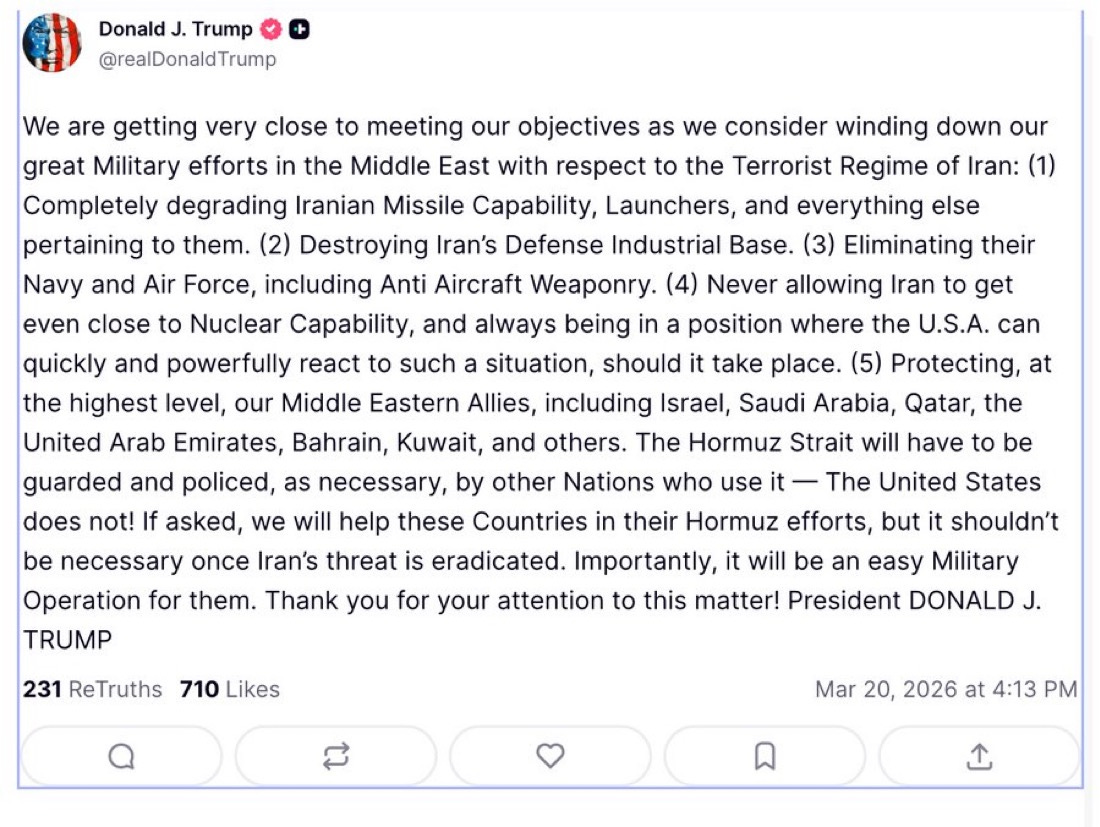
“The Hormuz Strait will have to be guarded and policed by other nations who use it. The United States does not.”
Three hours earlier he had called those same nations cowards.
Now he says reopening the Strait was their responsibility.
The same day a 19-nation joint statement appeared.
The United Kingdom, France, Germany, Italy, the Netherlands, Japan, Canada, South Korea, New Zealand, Denmark, Latvia, Slovenia, Estonia, Norway, Sweden, Finland, the Czech Republic, Romania, Bahrain and Lithuania all declared their readiness to help ensure freedom of navigation.
It is the most significant coalition development since the war began. It bypasses NATO and instead assembles a voluntary coalition of willing states.
It includes European powers, Pacific allies, Scandinavian countries, and Baltic states.
This is a serious coalition on paper.
It has not yet deployed a single ship.
Meanwhile CENTCOM is preparing for a campaign lasting at least one hundred days. The Pentagon has requested $200 billion in supplemental funding. Contingency plans now include the possible deployment of U.S. ground forces.
When asked about plans for Kharg Island, Trump said he could not reveal them.
When asked whether Israel would end the war when the United States does, he said he believed both countries want the same thing: victory.
When asked about a ceasefire, he said he did not want one.
When asked whether Iranian leaders were available for talks, he said there was no one to talk to.
Iranian officials say the same thing in reverse.
Two sides that say they have “no one to talk to” are now entering into week four of a war that began the morning after a diplomatic breakthrough.
The consequences are spreading far beyond the battlefield.
Iraq declared force majeure on all foreign-developed oil fields. Basra production has fallen from 3.3 million barrels per day to 900,000.
Iraq is not even a willing participant in the war.
Its exports are collapsing anyway.
III. The South Pars Sequence
On March 18 Israel struck the South Pars natural gas field with U.S. coordination.
Iranian gas flows to Iraq stopped immediately. More than one third of Iraq’s electricity supply disappeared.
Iran retaliated within hours.
Missiles struck Ras Laffan Industrial City in Qatar. Additional strikes targeted the SAMREF refinery in Saudi Arabia, the Mesaieed petrochemical complex in Qatar, and the Al Hosn gas field in the UAE.
QatarEnergy CEO Saad Al-Kaabi delivered the damage assessment.
LNG export capacity reduced 17 percent.
Two LNG trains offline.
Pearl GTL offline for at least one year.
Repairs expected to take up to five years.
Force majeure declared on long-term contracts to China, South Korea, Italy and Belgium.
Approximately $20 billion in annual revenue lost, roughly equivalent to 9 percent of Qatar’s GDP.
Before the war began Al-Kaabi warned U.S. officials that provoking Iran could destabilize global energy markets.
He was ignored.
Trump later said the United States knew nothing about the South Pars strike.
U.S. officials had already confirmed prior knowledge.
Netanyahu said Israel acted alone but also said Trump asked Israel to avoid similar strikes in the future.
Qatar demanded an explanation from Washington. Iranian diplomats were expelled. Qatar is no longer a neutral mediator.
Only Oman remains.
An Iranian spokesman was asked why Iran targeted Qatari gas facilities.
His response was simple.
“Who hit our gas fields first?”
From Iran’s perspective the sequence is straightforward.
Iranian gas fields were struck.
Iran retaliated against gas fields.
Those facilities belonged to countries that were not original combatants.
This is what wars without defined political end states produce.
Retaliation chains expand beyond the original participants.
Energy infrastructure becomes a battlefield.
The global economy absorbs the shock.
War does not end when weapons run out.
It ends when a political outcome exists that both sides can accept.
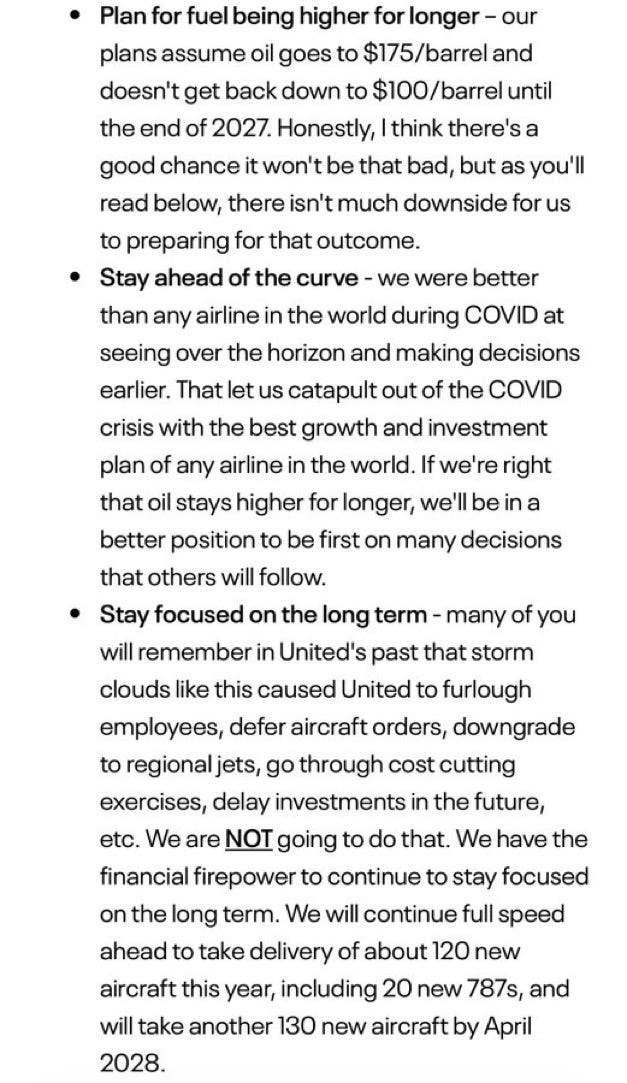
No such outcome exists. One side says there is no one to talk to. The other says the conditions for talking are impossible. The strait is still closed. Ras Laffan is offline for five years. Iraq’s oil fields are in force majeure. Corporations are pricing $175 oil. Governments are planning for a hundred days more.
The global economy is adjusting to a war that its architects have not yet defined an ending for.
Until they do, everything else is just the cost accumulating.
Part two will examine the Minab school, the strategic balance between the actors in this war, the wartime probability scenarios, and the question that remains unanswered.
Nice precise!
This is already becoming an absolute disaster … but that is only my opinion.