
The Math of War
Cheap drones, expensive interceptors, and the industrial contest now shaping the Middle East conflict

THE FOURTH TURNING POINT
Strategic Analysis Series
STATUS: Ongoing Conflict Assessment
This briefing examines how modern warfare is being decided as much by production capacity as by battlefield performance.
This is the third installment in the live conflict assessment series:
The first briefing, “The Death of Khamenei: Decapitation Is Not Collapse,”

examined whether the Islamic Republic’s institutions could withstand the shock of leadership decapitation after the assassination of its Supreme Leader.
The second briefing, “Axis Activation: External War as Internal Stabilizer,”

analyzed how regimes under existential pressure often expand conflict outward to stabilize the system at home.
This third briefing moves to the next stage of the war.
A pattern is becoming clear:
The war is becoming an industrial contest of attrition between cheap offensive weapons and costly defensive systems.
WAR CLOCK
T+0
Feb 28, 2026 | 01:30 EST
The first wave of U.S.–Israel strikes begins.
T+113h
Mar 4, 2026 | 19:00 EST
Iran’s regional proxy network steps up coordinated attacks across the region.
T+137h
Mar 5, 2026 | 18:30 EST
Drone saturation attacks continue across Gulf infrastructure and U.S. positions.
SNAPSHOT — Conflict Status
Cutoff: March 5, 2026 | 18:30 EST
137 hours (5 days, 17 hours) have passed since the opening strike.
• Iranian strikes recorded across 12 regional states
• More than 2,400 projectiles launched (missiles + drones)
• Energy infrastructure struck in Saudi Arabia, Bahrain, UAE, and Qatar
• Commercial shipping through Hormuz down roughly 90%
• Gulf states requesting additional interceptor supplies
• Western planners accelerating development of low-cost interceptor drones
The conflict is shifting from rapid escalation toward sustained attrition.
Confirmed Casualties
Primary Belligerents
• United States: 6+ service members killed, 20+ injured
• Israel: 12 civilians killed, 1,200+ injured, 11 missing
• Iran: 1,100–4,000+ fatalities reported, 5,000+ injured (military and civilian)
• Lebanon: 123 killed, 683 injured
Regional Spillover
• Bahrain: 2 killed
• Kuwait: 4 killed, 32 injured
• UAE: 3 killed, 78 injured
• Oman: 1 killed
• Jordan: 5 injured
• Qatar: 16 injured
• Iraq: 4 killed
The conflict now spans the widest geographic battlefield in the Middle East since World War II.
Leadership Decapitation
The opening strike wave eliminated multiple senior figures in Iran’s national security leadership:
Supreme Leader Ali Khamenei
Defense Minister Aziz Nasirzadeh
IRGC Commander Mohammad Pakpour
Iranian Defense Council Secretary Ali Shamkhani
Additional intelligence officials were also reported killed.
This level of leadership decapitation has no precedent in modern Middle Eastern conflict.
Precise casualty figures remain uncertain as operations continue across Iran and the wider region.
Market Reaction Since First Strike
S&P 500: 6,866 → 6,830 (−0.52%)
VIX: 19.87 → 23.75 (+19.53%)
WTI Oil: 67.05 → 81.05 (+20.81%)
Average U.S. Gasoline (Regular): 2.997 → 3.251 (+8.47%)
Equities remain relatively contained while volatility and energy markets begin pricing the risk of a prolonged regional conflict
KEY JUDGMENTS
The conflict is evolving into a weapons inventory and cost-exchange contest.
Iran’s strategy relies on cheap drone saturation and asymmetric attacks to impose economic pressure on missile defenses.
Western missile defenses remain technologically superior but face significant cost, coverage, and production constraints.
U.S. and Gulf air defenses are consuming interceptor inventories at a rapid pace.
Energy infrastructure and shipping routes have become a central battlefield.
The Strait of Hormuz remains the conflict’s most consequential escalation lever.
If the conflict persists, industrial endurance will likely become the decisive variable.
Coalition air superiority is pushing Iran toward increasingly indirect and asymmetric retaliation.
The absence of a clearly defined political end state increases the likelihood of a prolonged conflict.
I. The War Is Now a Math Problem
Modern missile warfare now comes down to one thing.
Inventory.
Since February 28, Iran and its regional networks have launched more than 2,400 missiles and drones across the Middle East.
Most have been intercepted.
But every interception carries a cost.
Defenders often fire two or even three missiles to destroy a single incoming threat.
Each engagement burns interceptors, radar capacity, and defensive coverage, shifting the battlefield toward endurance.
Every launch forces a defensive response, and every response draws down inventory.
A new era of warfare is emerging.
From Ukraine to the Middle East, the same pattern is emerging: saturation warfare favors the side that can produce and replace weapons fastest.
When thousands of cheap weapons fill the sky, the side that replaces them faster gains the advantage.
II. The $30,000 Drone vs the $4 Million Missile
The economic imbalance between offense and defense is one of the defining features of this war.
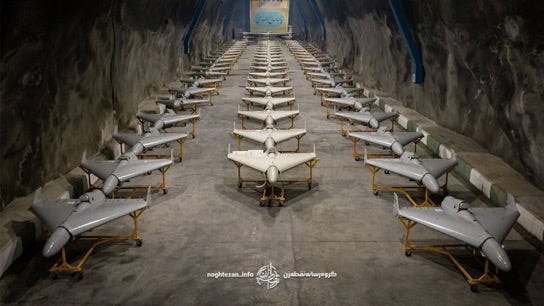
Iran’s most widely used attack systems are Shahed-series loitering drones.
Estimated cost:
$20,000–$50,000 per drone.
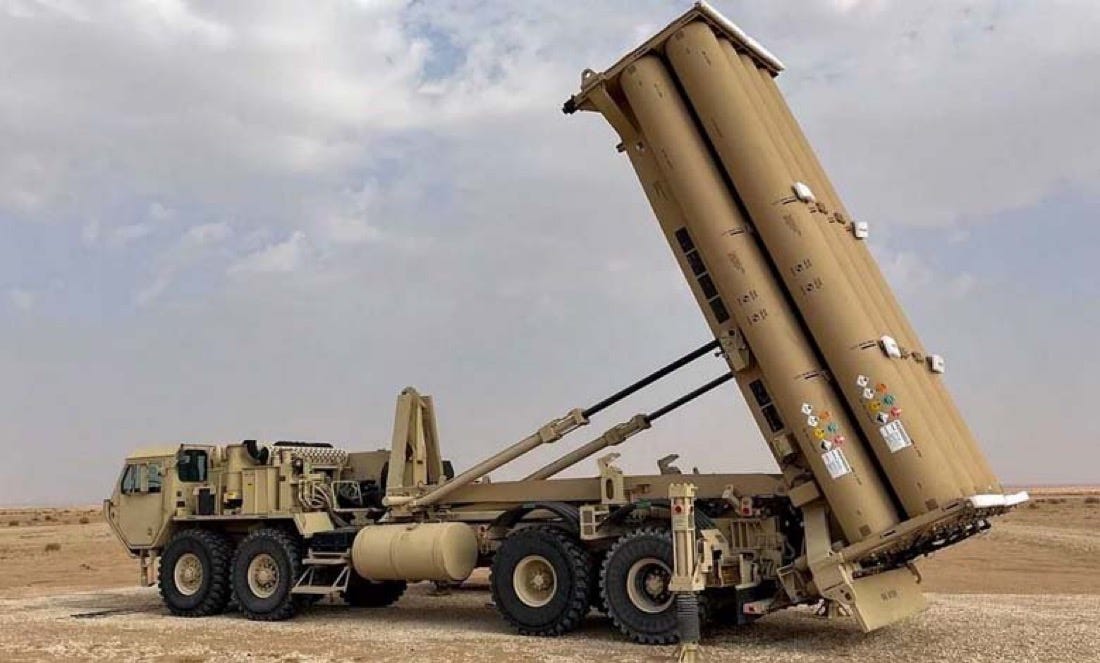
The Patriot PAC-3 interceptor used to destroy them costs approximately:
$3–4 million per missile.
In many engagements, defenders fire multiple interceptors to ensure a successful kill.
That cost imbalance is staggering.
One cheap drone forces a multi-million-dollar response.
In some engagements the cost ratio exceeds 60 to 1 in favor of the attacker.
Wars are not won by weapons alone anymore.
They are won by the capacity to build them.
And this is where the problem begins to move beyond the battlefield.
When defense depends on burning multi-million-dollar missiles faster than factories can replace them, the pressure doesn’t stay in the sky.
It spreads outward.
Defense budgets strain.
Energy markets react.
Political pressure builds.
The battlefield starts moving into factories, supply chains, and production lines.
And once wars reach that stage, they stop being about tactics.
They become tests of national endurance and industrial power.
III. When Manufacturing Becomes National Security
Long wars are rarely decided by tactics alone.
They are now decided by production capacity.
During World War II, American industrial output overwhelmed Axis production.
Factories became America’s most powerful weapons.
Iran’s drone program relies on relatively simple manufacturing processes and widely available electronics.
Analysts estimate Iran could produce thousands of attack drones each month.
Western interceptor production operates on a much slower cycle.
Lockheed Martin produced roughly 620 PAC-3 interceptors in 2025.
Scaling advanced weapons manufacturing takes time.
And time is not always available during wartime.
Wars are started by politicians, but they are sustained by factories.
For decades, U.S. economic policy prioritized finance, technology, and globalized supply chains while domestic manufacturing capacity declined.
More recently, broad tariff policies intended to revive American manufacturing instead disrupted supply chains and increased costs across parts of the defense industrial base.
None of these decisions were made with a drone saturation war in mind.
Modern wars do not only test militaries.
They test the economic systems that build them.
And the countries that can build faster, replace faster, and replenish faster usually win.
IV. When Defenders Start Choosing What to Save
In war, nothing is absolute.
Wars rarely end when weapons reach zero.
They end when confidence begins to erode.
Air defense systems operate on probability.
Even a 90 percent interception rate still allows some projectiles to get through.
When interceptor inventories begin to tighten, commanders face increasingly difficult decisions.
Not every incoming threat can be engaged.
Defenders must decide what to protect first.
Military bases.
Energy infrastructure.
Major cities.
Lower-priority targets inevitably receive less protection.
That creates a dangerous paradox.
Missile launches may decline as stockpiles shrink and launchers are targeted.
But successful strikes can increase.
Several regional states are now requesting additional interceptor shipments from the United States.
If defensive inventories fall too low, commanders may have to conserve missiles for the highest-value threats.
That means allowing more lower-level attacks to slip through.
And once people begin to see those impacts, including damaged infrastructure, interrupted energy supplies, and rising costs, the pressure will not stay on the battlefield.
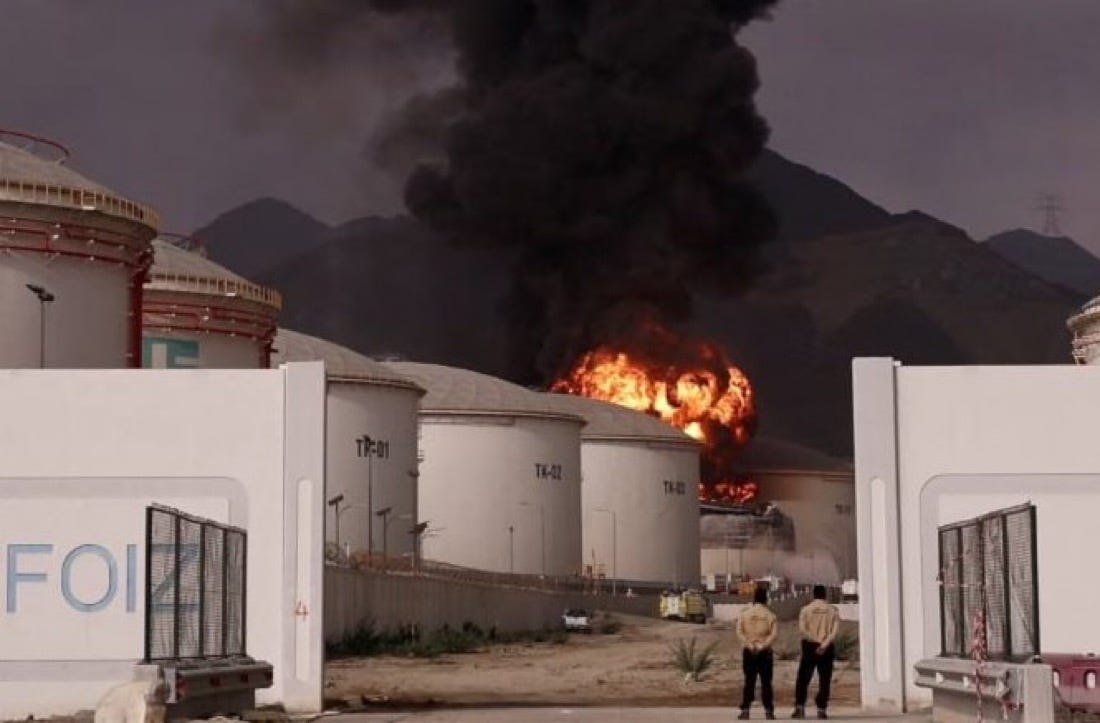
In missile warfare, perception can become as decisive as inventory.
V. The War of Budgets and Factories
The opening phase of the conflict demonstrated overwhelming Western airpower.
Iran’s long-range air defenses were degraded quickly, allowing U.S. and Israeli aircraft to operate with relative freedom.
But air superiority does not end wars in 2026.
It changes how they are fought.
Iran now appears to be pursuing a strategy based on saturation and endurance.
Cheap drones.
Missile pressure.
Energy disruption.
The goal is not necessarily total battlefield dominance.
It is simply to raise the cost of the conflict over time.
Factories competing with factories.
Supply chains competing with supply chains.
Budgets competing with budgets.
In the missile age, wars increasingly resemble balance sheets under pressure.
False: Iran’s long-range air defenses were degraded quickly, allowing U.S. and Israeli aircraft to operate with relative freedom. They are not overflying Iran, just launching standoff weapons.
Good one