
The Upscale Insurgency
The Lost Generation of American Politics — Episode V

Episode 1:

Episode 2:

Episode 3:

Episode 4:

This episode: Every insurgency eventually has to answer the same question: who is it really for?
The house is worth more than $600,000. The people living inside it may never own it.
This is the current political economy of Colorado’s First District, and it isn’t unique to Colorado.
Nearly three-fifths of adults hold at least a bachelor’s degree. The median household takes in almost $95,000. That is not enough. Professional, scientific, and technical services form the district’s largest industry.
A majority of households still rent.
More than 80,000 of the district’s residents live below the poverty line. Nine percent still lack health insurance, in 2026, in a district built almost entirely around white-collar work.
Homeownership remains below 49 percent.
Then Democratic primary voters nominated a twenty-nine-year-old democratic socialist.
Try to picture one of the voters who made that possible for a moment.
She has a graduate degree, a professional job, and a landlord. Her salary sounds like success to her parents. Her rent feels like failure every time it leaves her bank account.
It weighs on her. Every day.
She lives near homes she probably will never own and she tries to vote for candidates promising to change the bargain that placed her there.
She does not represent every Kiros voter. No single statistic tells us who voted for Melat Kiros.
Together, the numbers clearly describe a district where professional success, visible wealth, renting, poverty, and political insurgency walk the same streets.
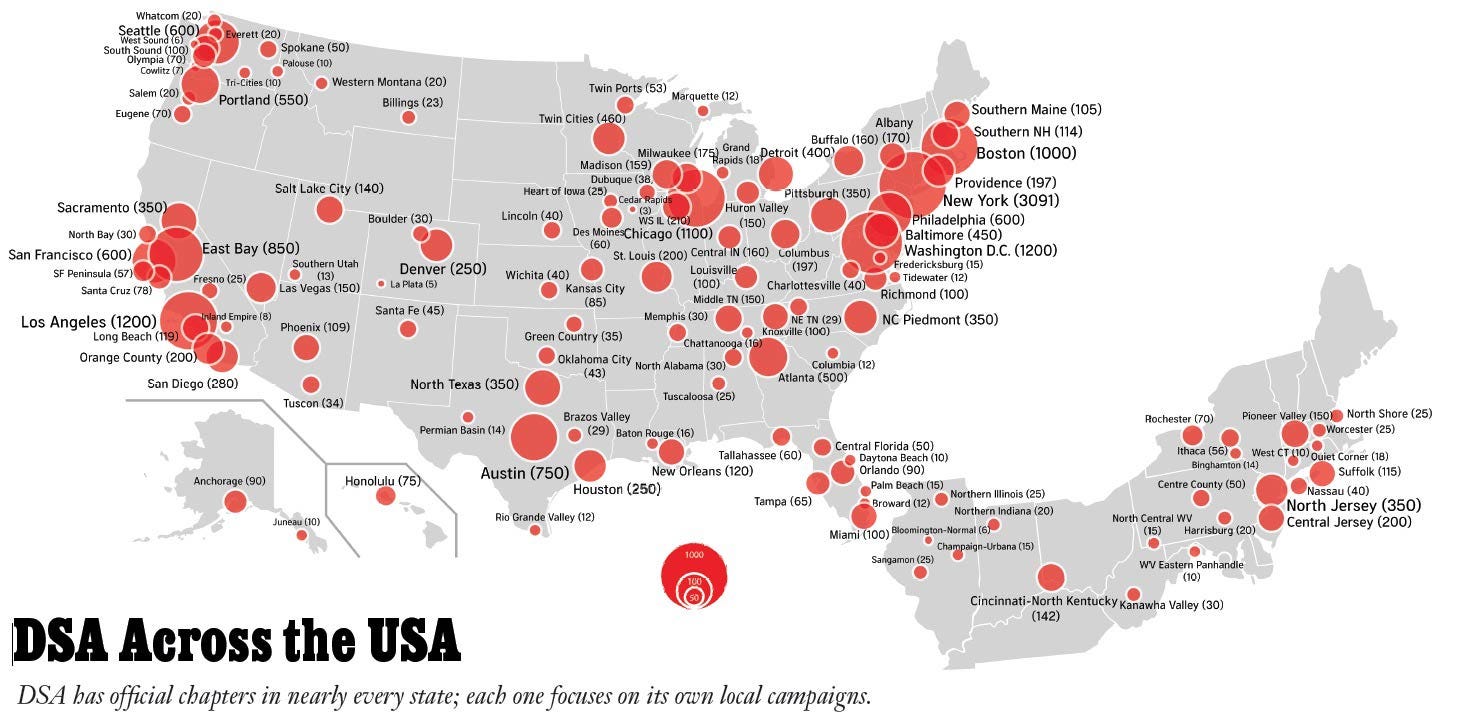
The Contradiction
This new coalition has grown from a generation which grew up during economic crisis and became educated enough to enter the professional economy just like it was told, yet has been increasingly unable to secure the homeownership, economic benefits, and durable stability that the same professional employment once promised.
They are forced to live amongst wealth while knowing they will statistically never be able to possess much of it.
Their insecurity is real. Their relative advantage can also be considered real. The young movement’s future depends on whether its constituents can acknowledge that both exist.
Credentials may still open the door.
They no longer reliably guarantee ownership of what lies behind it.
Four Different Advantages
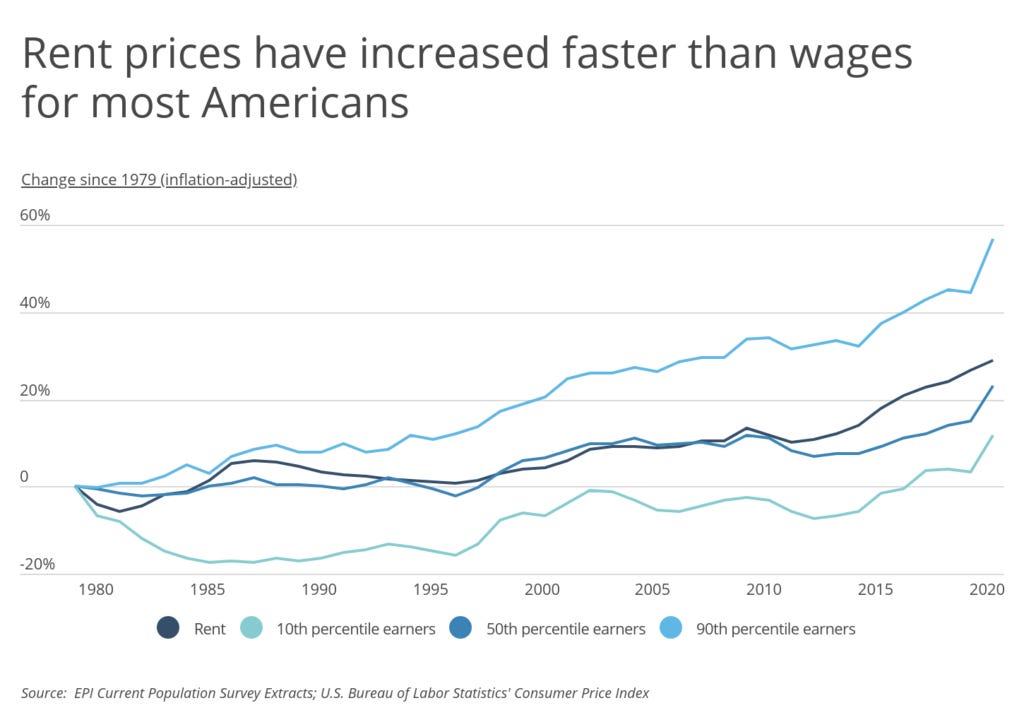
Class becomes difficult to measure when different kinds of lifestyle advantages are treated as though they all mean the exact same thing.
Income measures what arrives in your bank account after work. Wealth measures what is allowed to grow after expenses. Education measures your credentials. Institutional access measures your ability to make the credential matter in your life.
The growing upscale insurgency coalition performs exceptionally well among people who often possess the first, overwhelmingly possess the third, understand the fourth, and yet remain increasingly uncertain about how they will achieve the second.
For a visual example: A renter earning $135,000 a year in New York may have more income than a homeowner earning $65,000 in a midwestern town. The homeowner still possesses an asset that can appreciate and whose monthly cost no landlord can suddenly raise.
One of the Americans has a larger paycheck. The other owns the ground beneath their feet.
The Closer Test
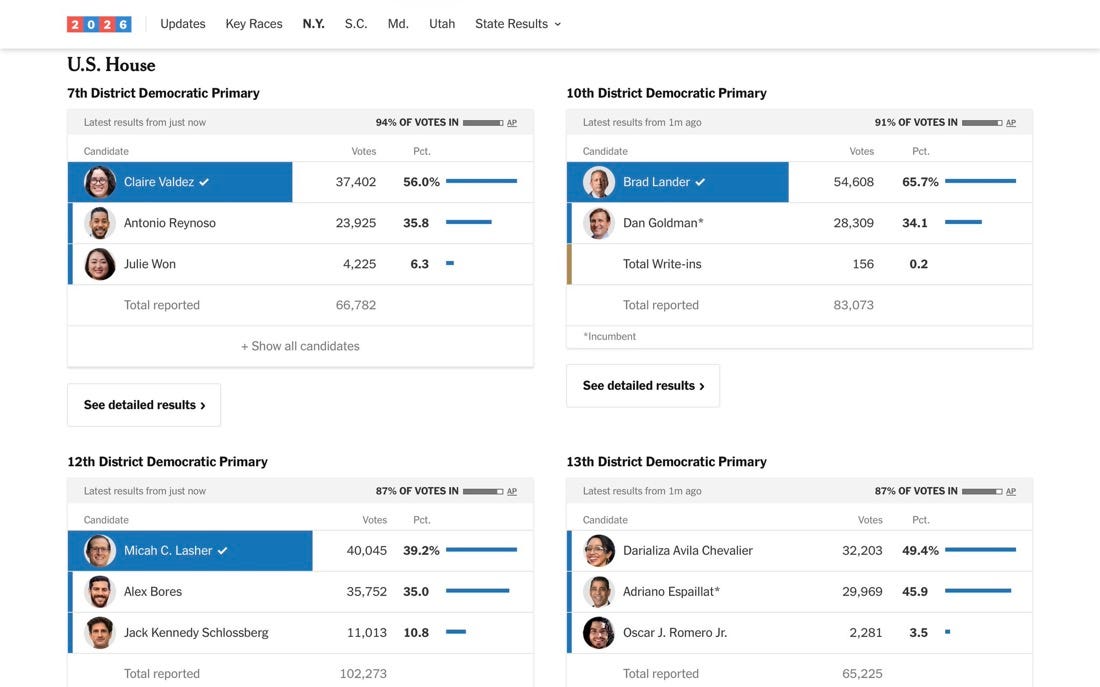
New York’s recent primary returns can be examined precinct by precinct, which makes them the sharper evidence of the growing upscale coalition.
A precinct group with high college attainment is exactly what it sounds like: a set of election districts where a large share of adult residents hold degrees.
It does not identify how any individual resident voted. That limit applies to every figure below.
In the NY-7 precinct group with the highest college-attainment rates, Claire Valdez’s margin reached 36.4 points. In the highest-income precinct, her margin reached 33.7 points. However, in the lowest-income group, Antonio Reynoso led by 32.1 points.
In NY-13, Darializa Avila Chevalier’s margin in the highest college-attainment precinct group reached around 20 points. In the highest-income group, 5.1 points. Adriano Espaillat led the lowest-income group by approximately 9.1 points.
This evidence shows the pattern appears to hold in a poorer district further from the frontier of Manhattan’s gentrification frontlines, although at reduced intensity.
Individual-level survey data points the same direction. A Pew survey from January 2026 found approximately 41 percent of college-educated Democrats view democratic-socialist politicians favorably, against just 26 percent of Democrats without a degree.
In that same poll, upper-income Democrats came in at 40 percent, and lower-income Democrats at 24 percent.
This survey measures people rather than places, and it aligns with the precinct maps.
But precinct groups and national polls still only describe averages. What they can’t show is who actually showed up inside those numbers.
The Coalition on the Ground
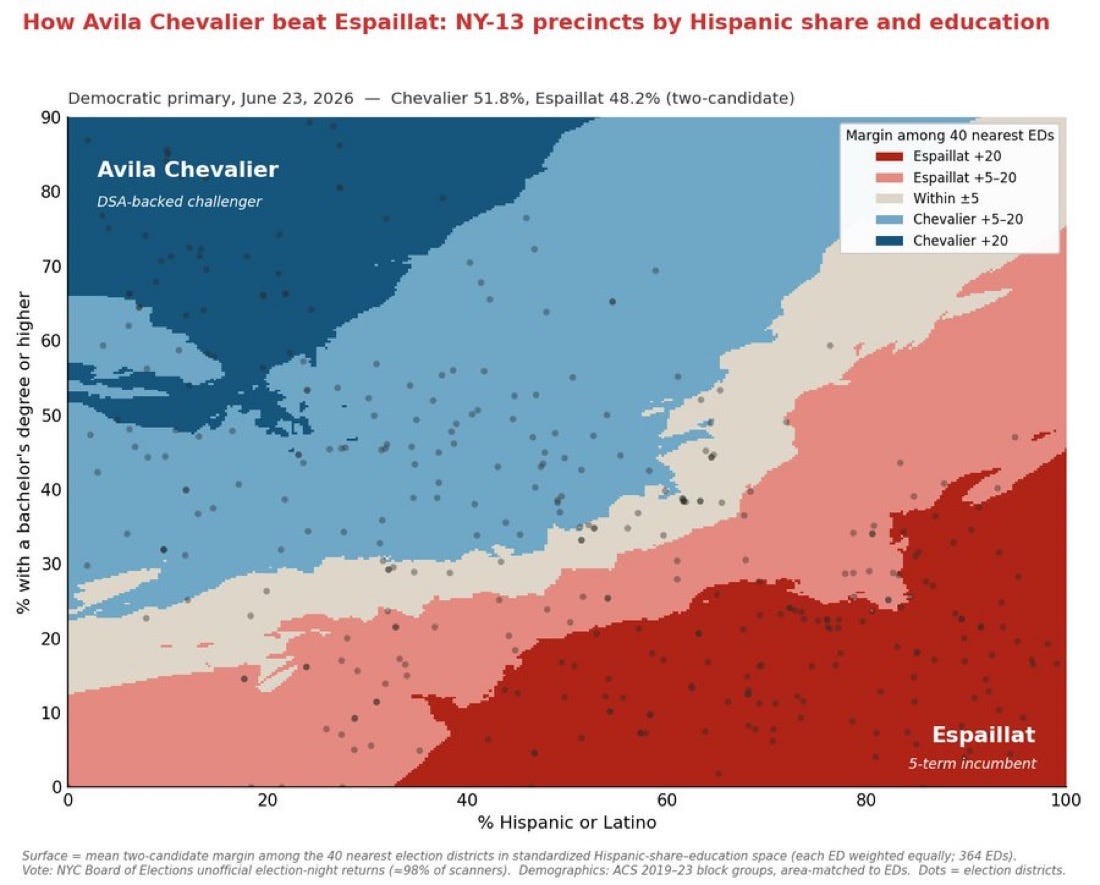
Michael Lange’s ecological estimates, modeled from the 2026 voter file rather than residential Census data, complicate the simplest reading of those numbers.
Chevalier won an estimated plurality of Black voters in NY-13 and carried Black voters under 50 by an estimated eleven points. Valdez won estimated support across every racial group and age bracket in NY-7.
Both districts contain working-class voters of every race who chose the insurgent. The clearest break runs through institutions and generations.
Race alone does not fully explain it.
This was not primarily the coalition that built the old Harlem machine, sustained the traditional labor establishment, or anchored the working-class Democratic coalition of the twentieth century. They are younger, predominantly renters, college graduates, and professionals living on city blocks whose wealth they could see but increasingly could not imagine owning.
If that is who the voters were, the next question is who built the organization waiting to receive them.
Inside the Movement
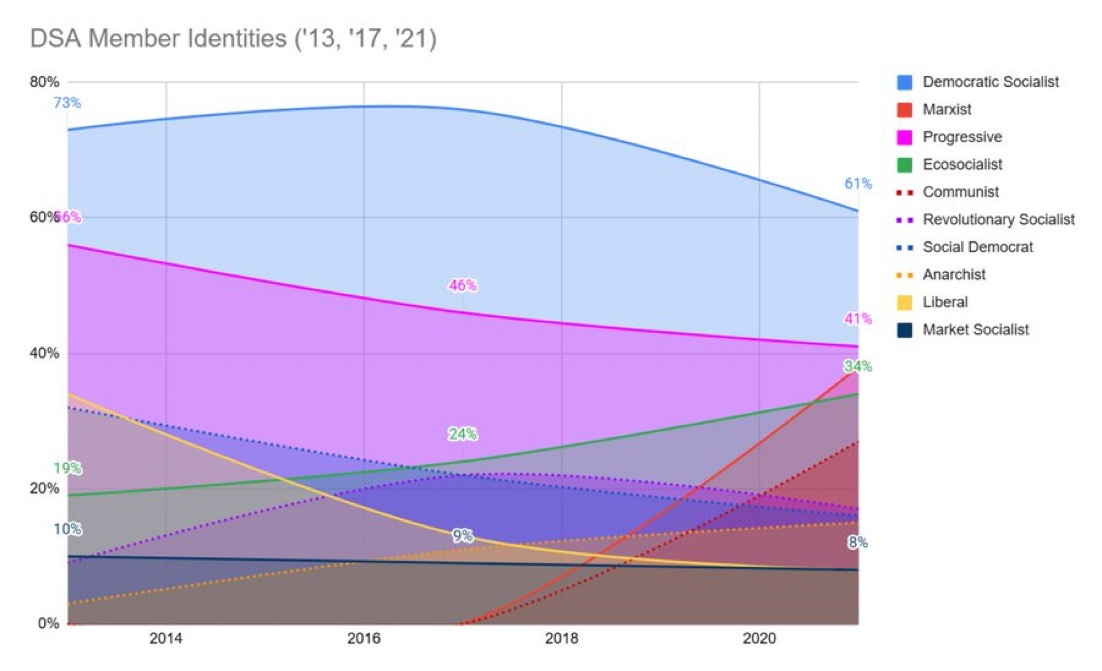
DSA’s 2021 national member survey was sent to approximately 95,000 members and received 12,971 responses. The DSA itself cautioned that the respondents of the poll skewed toward the members most active inside the organization.
The numbers still tell us part of the story.
More than four in five members over 25 held at least a bachelor’s degree. More than one in three held an advanced degree. Nearly half reported household income below $60,000. More than one in four reported at least $100,000. Median household income fell between $60,000 and $80,000. The median age was 33 years old.
The survey describes a growing coalition more complicated than either its biggest defenders or its loudest critics care to admit. DSA draws heavily from the professional class without drawing from one income class. Its members share education levels more consistently than they share income or race.
They believe work should come with more power over the institutions that govern it.
Their critics hear a professional class describing its own frustrations in universal language.
Both descriptions contain evidence.
Neither one settles what the movement owes the people standing outside it.
The Privilege It Cannot Deny
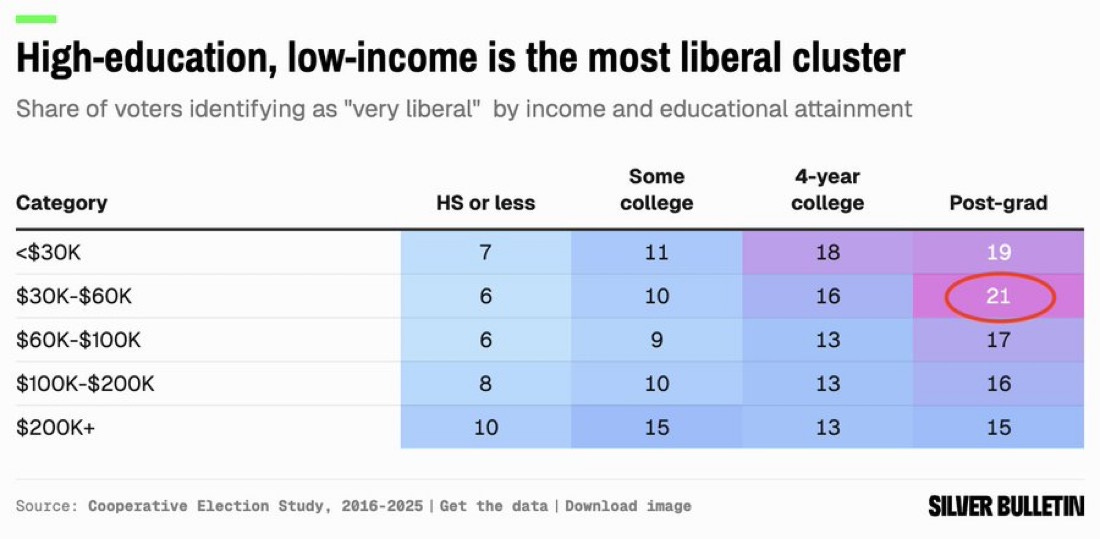
Economic insecurity does not erase relative advantage.
A graduate degree remains valuable. A professional salary creates choices unavailable to a low-wage worker. Flexible schedules, institutional vocabulary, donor networks, political contacts, and proximity to journalists and organizers make political participation easier.
The ability to experience a broken bargain and the ability to organize around it are distributed unevenly. That is why the movement’s public face is more credentialed than the generation whose insecurity produced it.
Which raises the obligation that comes with that visibility.
A coalition cannot ever claim to speak for the working class while it continues treating disagreement from working-class voters as ignorance, manipulation, or moral failure.
The movement still must be able to speak to the nurse without a graduate degree, the construction worker without a nonprofit network, the small-business employee worried about rising prices, the parent focused on public safety, and the homeowner whose entire wealth sits inside one aging house.
None of those people are confused about their interests. Several have simply concluded that this growing movement is not talking to them.
The Neighborhoods
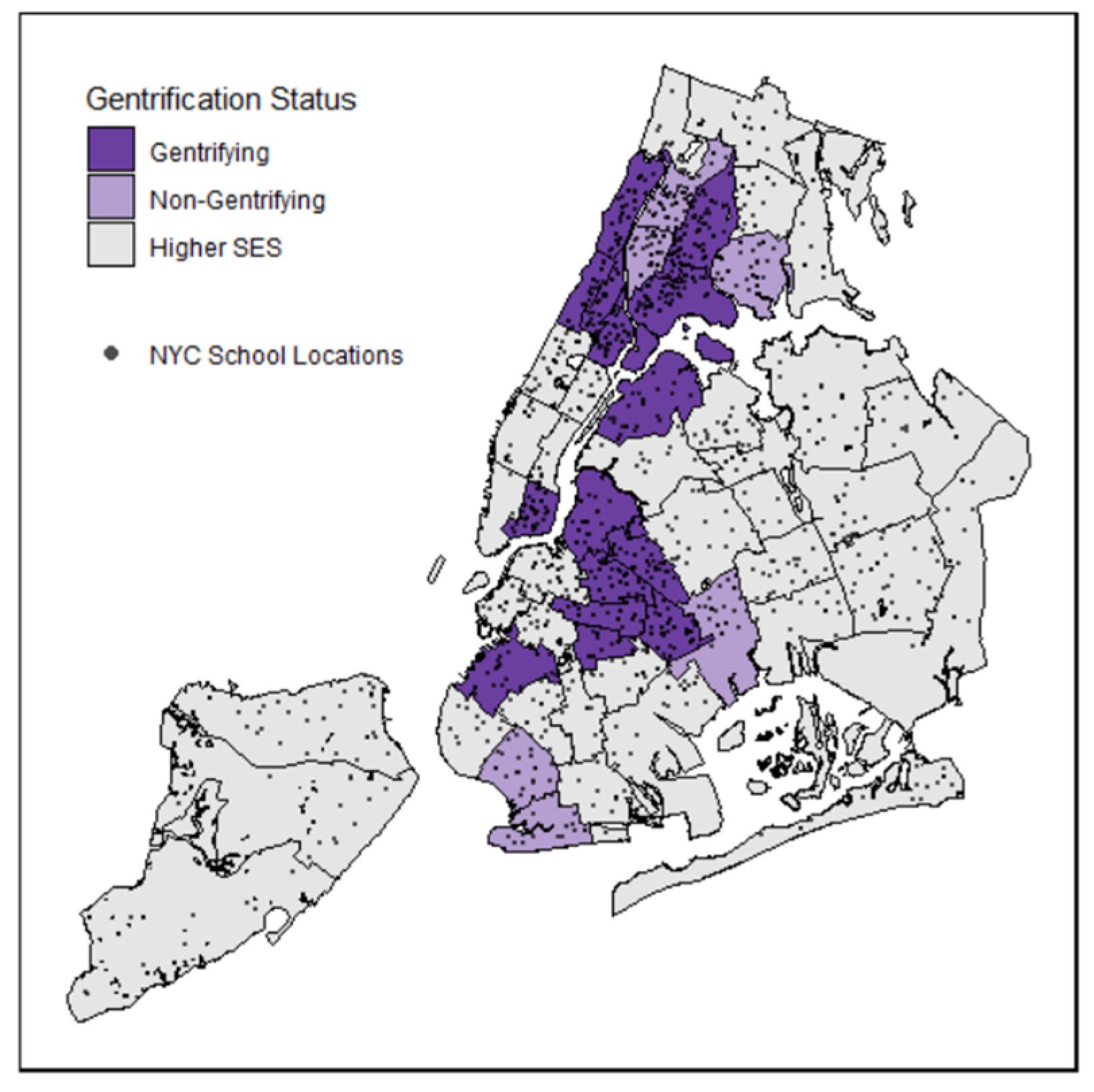
Real median rent rose 102.3 percent in Greenpoint and Williamsburg between 2006 and 2024.
This isn’t just a one neighborhood trend. Bushwick rose 93.8 percent.
Central Harlem rose 52.5 percent.
Harlem shows the most concrete version of the whole story. In Central Harlem, the largest income bracket in 2000 earned $20,000 or less. By 2024, the largest bracket earned between $100,001 and $250,000. Through all of it, 26.7 percent of the neighborhood stayed below the poverty line and 29.3 percent of renter households paid more than half their income in rent.
Affluence, poverty, and credentialed newcomers now coexist on the same New York City blocks.
Denver ran the same transformation at city scale. Rent rose 77 percent between 2010 and 2019. Home values rose 79 percent. Household income rose 32 percent. By 2019, nearly 59,000 households were cost-burdened and close to 52,000 severely cost-burdened.
Both cities reveal a similar finding.
Gentrification is increasingly placing several class systems on the same city block. One resident owns the building whose value doubled. Another rents the apartment whose cost doubled. A third cleans the office where the second works. They share a ZIP code and experience the same economy as three different events.
Precinct averages compress their differences. Politics eventually reveals them.
The growing coalition performs best in places where professional opportunity and asset exclusion meet. Its voters may earn enough to remain near wealth while owning too little to feel truly protected by it.
That same divide, between who organizes and who simply lives somewhere, runs straight through organized labor.
The Labor Split

In NY-7, Reynoso carried District Council 37, representing roughly 150,000 workers and 89,000 retirees, along with RWDSU, the Hotel and Gaming Trades Council, and the Working Families Party.
The growing coalition did not go without labor entirely. Valdez carried the UAW and AFA-CWA. She had previously been a UAW organizer and unit chair before she ran.
The same split repeats one district over.
In NY-13, Espaillat carried DC37 and RWDSU. Chevalier, a UAW member, carried the UAW. Region 9A celebrated both women as union members heading to Congress.
The same pattern appearing in two adjacent races is unlikely to be accidental.
This is the difference in what each side of labor thinks a union is for. Some unions enter politics to preserve bargaining relationships, protect contracts, and maintain access to officeholders. Others treat campaigns as an extension of organizing. The disagreement is partly ideological and also a disagreement about what political power is for.
One side sees electoral politics as a relationship to manage. The other sees it as another workplace to organize.
That same fault line, old institutions against a newer theory of power, is not new to American politics.
It has a distinct name and a history.
The Brahmin Left
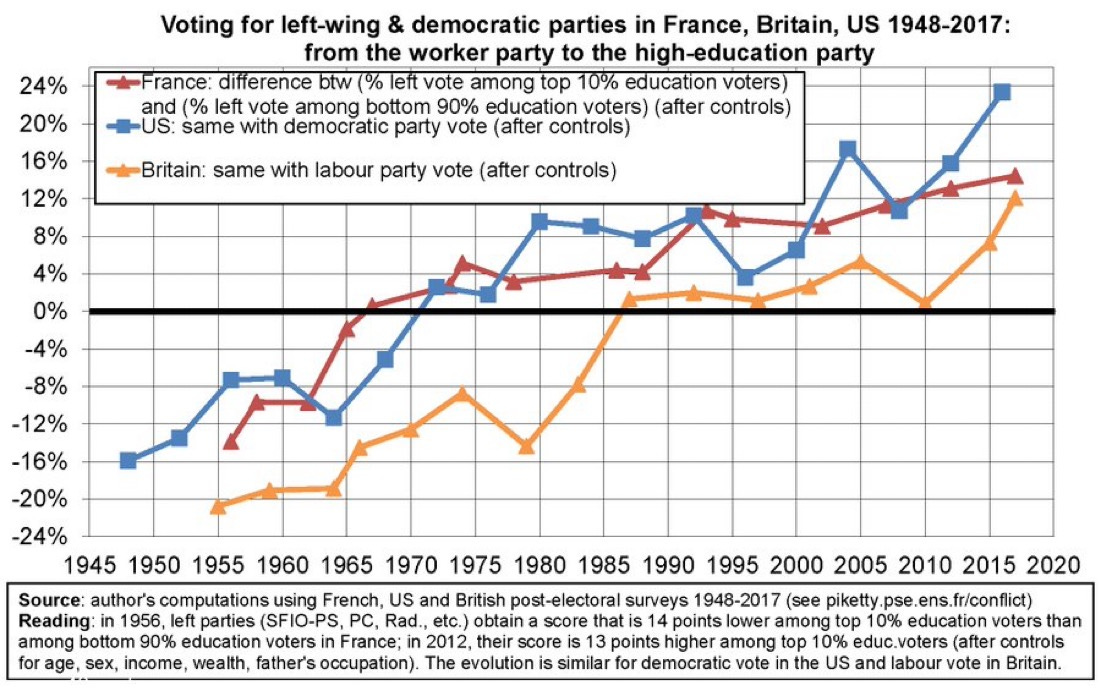
Amory Gethin, Clara Martínez-Toledano, and Thomas Piketty analyzed over 300 elections across 21 Western democracies between the years 1948 and 2020.
What they found reshapes how this whole episode should be read. Left-wing parties, which once were supported disproportionately by low-education and low-income voters, gradually over the years have become the parties of the highly educated. High-income voters stayed comparatively aligned with the right-wing.
The researchers described this as the Brahmin Left, set against the Merchant Right.
That study explains why education moved left. It does not yet fully explain New York or the growing DSA coalition.
Here is where the 2026 races depart from the historical pattern. In these races, education and income sometimes moved in the same exact insurgency direction. This may identify a newer urban coalition: high earners without high wealth, professionals without ownership, and institutional insiders without institutional loyalty.
The old Brahmin Left was accused of trading true economic redistribution for cultural politics. This insurgency is trying to use the Brahmin electorate to restore economic redistribution.
Whether voters outside that electorate believe the distinction is a separate question.
That distinction only matters if the movement can actually act on it. A professional-class coalition can demand genuine redistribution. It can also design redistribution around only the problems it knows best.
Student debt, rent, childcare, public transit, and professional precarity are real class issues.
So are wages, energy costs, public safety, occupational licensing, manufacturing decline, small-business survival, and the dignity of work that does not require a degree.
A national movement must hear out both lists.
The obvious historical parallel turns out to be the wrong one. George McGovern’s 1972 coalition is the comparison people reach for, and it fits worse than it appears. McGovern took 37 percent among college-educated voters, 43 percent among manual workers, and 49 percent among voters with only a grade-school education.
He is a precedent for how activists may capture a party’s machinery. He should not be treated as a precedent for this electorate.
Piketty explains the voters. McGovern explains the mechanism.
Whether this specific version of the pattern holds, or eventually cracks under its own contradictions, is not a question the historical record can answer. It is only a question about what happens next.
Three Forecasts
The Class Challenge — 65 percent. By 2030, a nationally visible organization, caucus, or candidate network emerges from inside the insurgent left and explicitly challenges the movement’s professional-class leadership, language, or priorities. The challenge must produce a contested federal primary, a formal organizational split, or a published platform centered on occupation, income, or union representation. A movement organized around class will eventually be asked to describe its own.
That question about internal representation is only the first test. The second is whether the movement’s existing allies stay allies.
The Left-Labor Compact — 45 percent. By 2032, at least three national or multistate unions endorse candidates from the DSA-Justice Democrats pipeline in at least five federal races across two consecutive election cycles. The movement has built candidates. Labor has built durable institutions. Neither has proved it can operate through the other.
If the first two forecasts test what happens inside the coalition, the third tests what happens outside its home turf entirely.
The Statewide Test — 35 percent. By 2032, an insurgent candidate wins a statewide Democratic primary in a competitive or politically mixed state while drawing substantial support outside the state’s largest highly educated urban counties.
Each forecast tests the same underlying question from a different angle: whether the coalition can become something larger than the districts that built it.
What the Map Will Tell Us
The upscale insurgency has already proved that educated urban voters can overthrow the Democratic establishment.
That was the easier test.
The harder one begins after that victory.
Can a movement led disproportionately by professionals understand forms of insecurity that do not sound like its own?
Can it build with unions whose members may share its economic goals and reject parts of its cultural language?
Can it speak to renters and homeowners, graduates and tradespeople, public employees and small-business workers?
Those questions all collapse into one distinction. A faction needs enough voters in the right districts. A governing coalition has to persuade people who do not recognize themselves in its leadership.
The contradiction is the test. Winning a district proves that the movement exists. Winning a state would prove that it can travel.
Governing would prove that it learned whom it was for. The map will eventually tell us how far it got.
E.J.M. — The Fourth Turning Point
Next: Episode VI — The Party Bernie Built
Turning a human life into a managed asset for public consumption. Such a sharp look at how everything has to wear a corporate badge now.